Building Leaders Through Christian-Based Education
Africa's most urgent leadership crisis is not a shortage of capable people. It is a shortage of people with the character to lead well — with integrity, with humility and with a vision that reaches beyond personal advancement to the flourishing of every community they serve. Christian-based education is uniquely equipped to build that kind of leader.
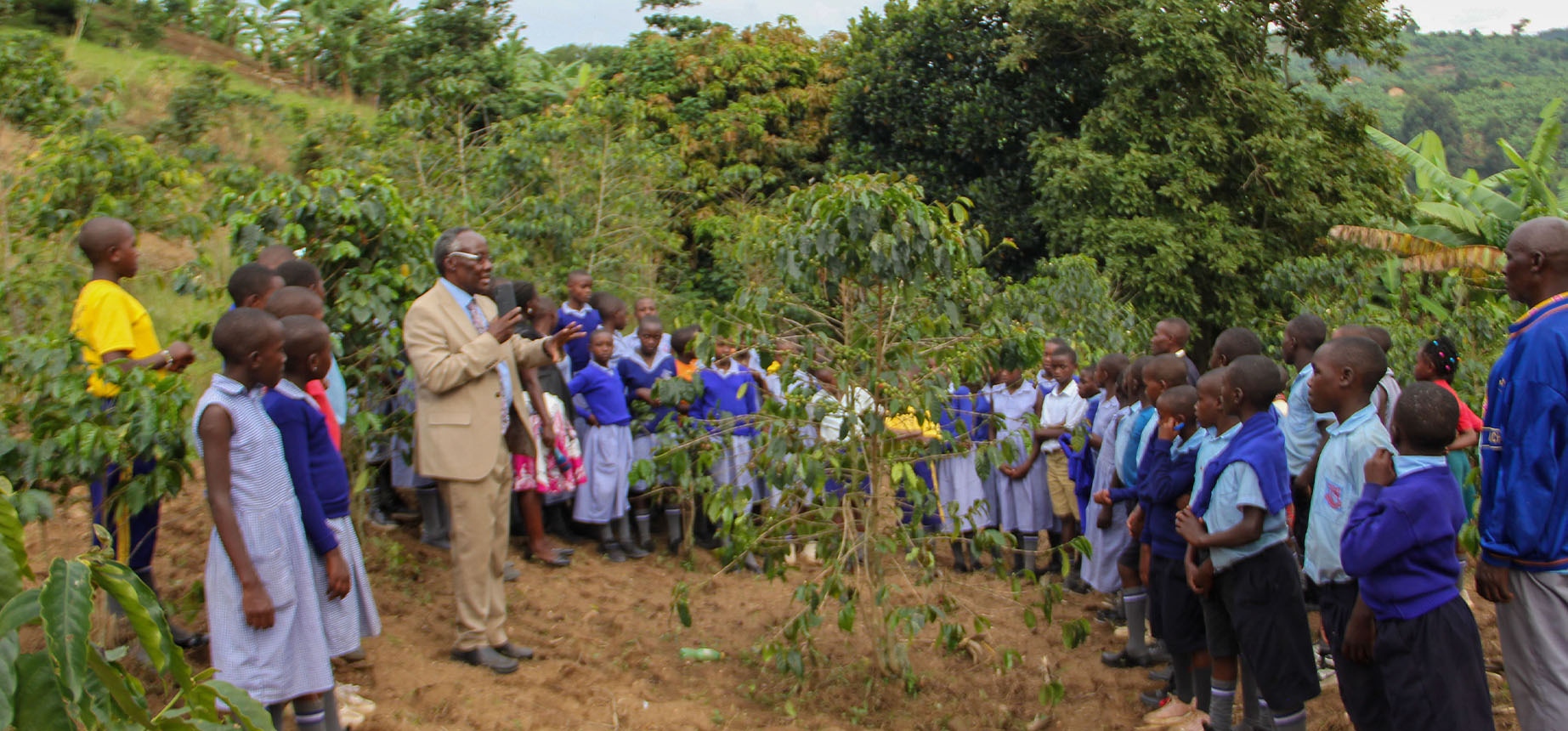
When Africa looks back on the leaders who built its institutions, sustained its communities through crisis and inspired generations after them, a striking pattern emerges. Many of the continent's most transformational leaders were shaped in schools where faith was not a side activity but the central organising principle of education. Where the measure of success was not only academic achievement but moral formation. Where the student was not only trained to think but challenged to become.
For thirty years, CHIFCOD Christian Foundation has been operating in that tradition — and refining it. Across five campuses in western and central Uganda, CHIFCOD is building not just graduates, but leaders. Not just qualifications, but character. And the evidence of what that produces is visible across every sector of Uganda's economy and society today.
The Leadership Crisis in Modern Africa
Africa has produced extraordinary leaders — visionaries, peacemakers, economists and educators whose contributions have shaped nations and inspired the world. But the continent also faces a well-documented leadership deficit. Corruption remains among the most significant barriers to development across sub-Saharan Africa. Institutional trust is low. And in too many communities, the educated class has extracted value from public life rather than investing it.
The roots of this crisis are not primarily structural. They are characterological. Systems can be reformed by skilled technocrats. But only people of genuine integrity can sustain those reforms across decades and generations. The question is not whether Africa has intelligent, educated people — it clearly does. The question is whether its education systems are forming people whose intelligence and education are anchored in moral purpose.
Christian-based education offers a direct, proven response to that question. Not because Christian schools are perfect — they are not — but because the Christian worldview provides the most coherent framework for understanding why integrity matters, why service is greater than self-advancement and why leadership is always, ultimately, stewardship.
"The greatest among you shall be your servant." The leader whom CHIFCOD seeks to form is not one who demands honour — but one who creates it in others.
— Matthew 23:11, foundational to CHIFCOD's leadership formation philosophy
The CHIFCOD ACTS Framework — Four Dimensions of the Complete Leader
CHIFCOD's vision of the complete leader is captured in the ACTS values framework — four interlocking dimensions that together describe the graduate whom thirty years of transformational education is designed to produce. These are not aspirational buzzwords. They are specific character qualities, deliberately formed through every aspect of school life.
Analytical
The CHIFCOD leader thinks clearly and critically. They do not accept inherited assumptions without examination. They gather evidence, weigh arguments and make decisions grounded in both reason and wisdom.
Connected
The CHIFCOD leader is deeply connected — to their community, to their peers, to the global world and to God. They build partnerships, honour relationships and lead with the awareness that no one flourishes alone.
Tough
The CHIFCOD leader is resilient. They have been formed in environments that demanded persistence, honesty and courage. They do not collapse under pressure — they lead through it.
Successful
The CHIFCOD leader achieves — not merely in examination halls, but in life. Their success is measured in enterprises built, communities served and generations inspired.
How Christian-Based Education Forms Leaders — Practically
The formation of leaders through Christian-based education is not achieved through chapel attendance alone. It is the cumulative effect of an entire school culture oriented around a set of convictions about what human beings are, what they are for and how they should treat one another.
1. A Foundation of Dignity and Vocation
The Christian conviction that every human being is made in the image of God — the imago Dei — has profound implications for how CHIFCOD treats its students. Every child who walks through the gates of a CHIFCOD campus is treated as a person of extraordinary potential. Not because of their family's income or their district's examination history — but because of who they fundamentally are. This is the foundation of genuine confidence: not the fragile, performance-dependent confidence of the examination system, but the deep, stable confidence of a person who knows their worth.
2. Servant Leadership as the Curriculum
From the earliest years at Kirima Parents' Primary School, CHIFCOD students are taught that leadership is service. Prefects are not appointed to exercise authority over their peers — they are commissioned to take responsibility for their wellbeing. School enterprises are not run to generate personal profit — they are managed to demonstrate that enterprise can serve community. The entire school culture models the truth that the most powerful leaders are those who make others powerful.
3. Integrity as Non-Negotiable
CHIFCOD's six core Christian vocational virtues — entrepreneurial vision, godly character, economic independence, generosity, moral transformation and eternal focus — place integrity at the absolute centre of the graduate's identity. In a context where corruption is normalised, this is a countercultural act. CHIFCOD graduates are formed to be the kind of people who refuse to participate in systems of extraction and dishonesty — not because integrity is professionally advantageous, but because it is who they are.
4. The Community as Leadership Laboratory
Leadership cannot be taught only in classrooms. It must be practiced in real contexts with real consequences. CHIFCOD's campuses are embedded in communities that provide exactly that laboratory. The student who helps design a community water project is learning to lead. The student who manages a school livestock enterprise and must account for losses and gains is learning to lead. The student who mentors a younger peer through academic difficulty is learning to lead. By the time a CHIFCOD graduate reaches a position of institutional authority, they have already been leading for years.
Thirty Years of Evidence — Leaders Across Uganda
The graduates of CHIFCOD schools are not a theoretical proof. They are a visible, measurable, present reality. Doctors who returned to serve communities in western Uganda rather than building careers in Kampala or abroad. Teachers who took what CHIFCOD gave them and multiplied it in schools across the region. Entrepreneurs who built enterprises that created employment in communities that previously had none. Community leaders who navigated post-conflict reconstruction with the integrity and resilience that their CHIFCOD formation gave them.
From the formerly educationally barren highlands of Rutenga to the mountain community of Nyakabungo — where universal failure in primary leaving examinations was the norm before CHIFCOD arrived — the story of CHIFCOD's leadership formation is written in the lives of the graduates who are walking, working and leading across Uganda every day.
The Six Virtues of a CHIFCOD Graduate
CHIFCOD's Christian vocational virtues are not vague aspirations. They are specific qualities, deliberately cultivated across every year of a student's formation:
What Africa Needs — and What CHIFCOD Is Building
Africa's future depends not on aid, not on natural resource revenues and not on foreign investment alone. It depends on the quality of the leaders who will steward all of those things. Leaders who manage public resources without stealing them. Leaders who build institutions that outlast their tenure. Leaders who invest in the communities that raised them. Leaders who inspire the generation after them to do the same.
Those leaders are built in schools. In the culture, the values, the relationships and the character formation of thirty years of education. CHIFCOD has been building them, quietly and persistently, since 1994. And through the Jungle Professor Rendezvous Africa Center opening in Kampala in 2026, that model of leadership formation is about to reach the entire continent.
Africa does not need more powerful leaders. It needs more leaders of character. CHIFCOD is building them — one graduate at a time.